Archives
You can find older issues of the magazine here.
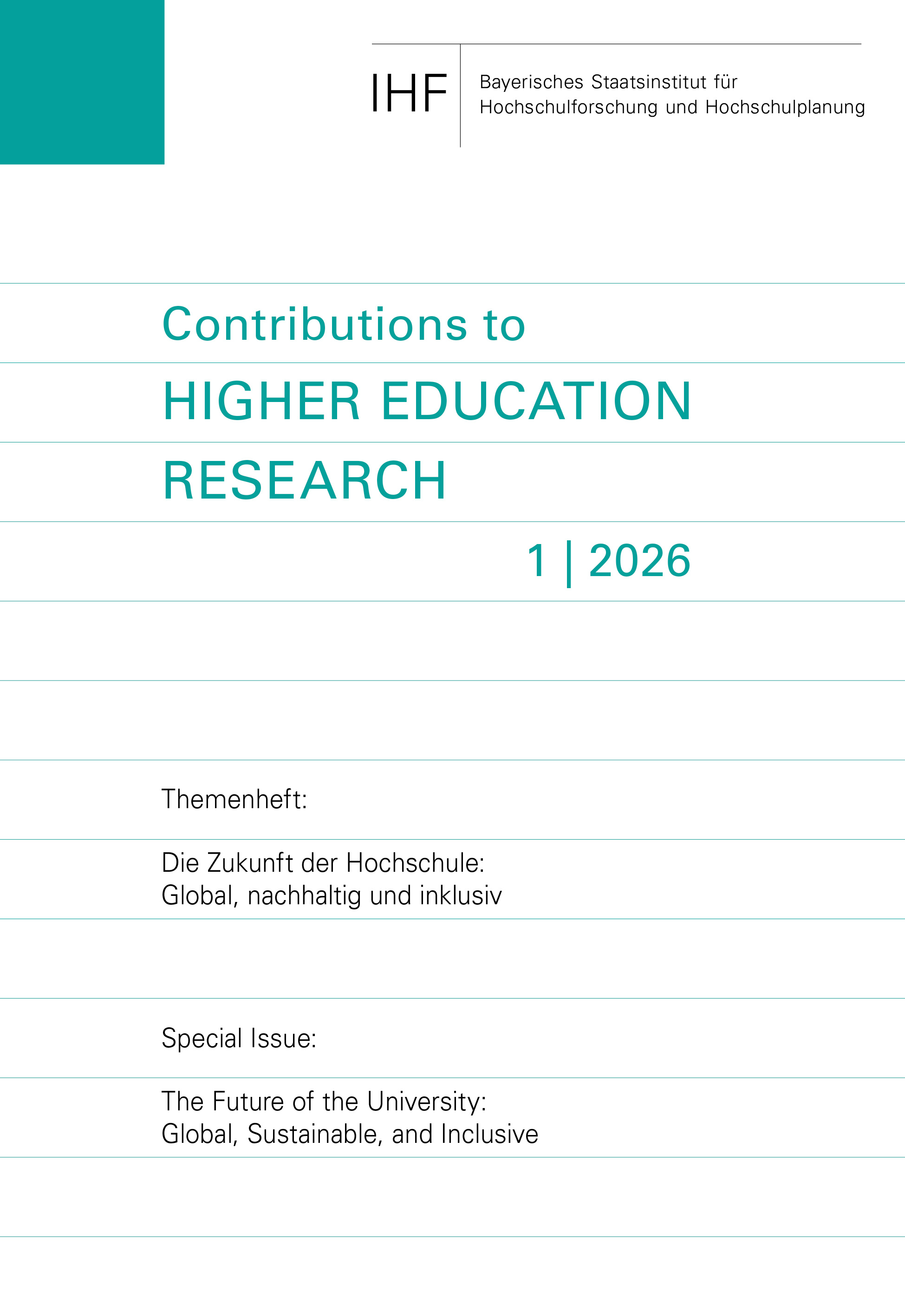
Vol. 48 No. 1 (2026)
The English-language special issue of Beiträge zur Hochschulforschung examines the future prospects of higher education institutions in the context of sustainability, inclusion and global transformation processes. Produced in collaboration with guest editors Prof Eva Cendon (FernUniversität in Hagen), Prof Mpine Makoe (University of South Africa – UNISA) and Irina Haury (FernUniversität in Hagen), the issue is based on the UN's 2030 Agenda with its Sustainable Development Goals (SDGs) and the UNESCO initiative ‘Futures of Education’.
An introductory overview article opens up a global perspective on higher education development, highlights inclusion and sustainability, and discusses alternative, non-Eurocentric approaches. Other articles deal with open science as a tool for knowledge justice and SDG-oriented research, the commitment to sustainability at European universities, starting a degree programme in distance learning, and the connection between discrimination, social integration and mental health.
Practical contributions from South Africa and Mauritius broaden the view on decolonial approaches and national strategies for the future. The issue is complemented by a viewpoint on sustainable human resource management, two book reviews, and insights into the strategic management of distance learning universities by Prof Puleng LenkaBula (University of South Africa) and Prof Ada Pellert (former Rector of FernUniversität in Hagen, current Rector of the University of Klagenfurt).
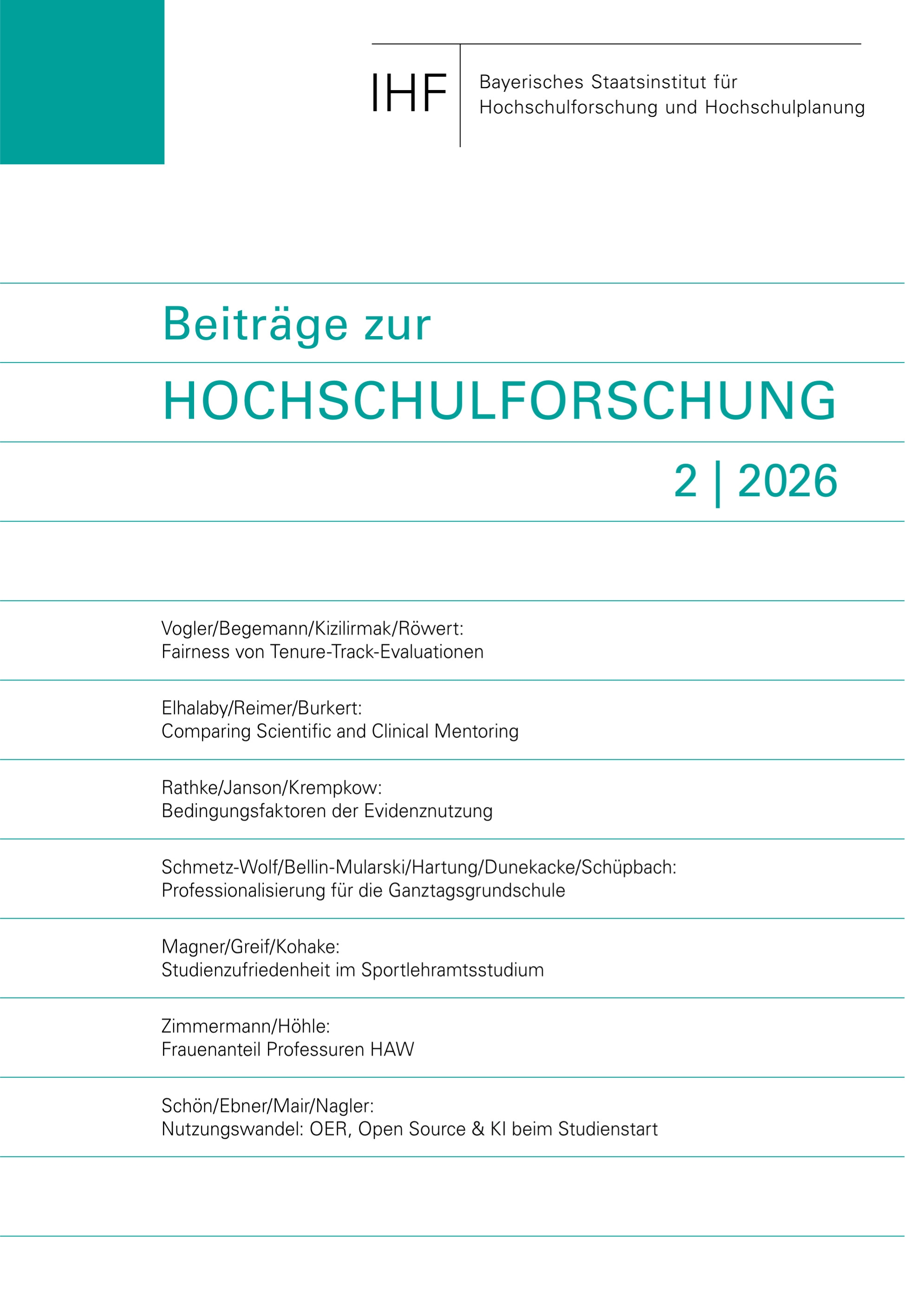
The open-topic issue 2026/2 of Beiträge zur Hochschulforschung is devoted to current issues from various areas of the higher education system – ranging from academic careers and university governance, through study and teaching, to digitalisation and equality.
A key focus is on the framework conditions for academic careers. The articles examine the design of tenure-track procedures at German universities, perceptions of fairness in selection and evaluation processes, and the importance of tandem mentoring for clinician scientists in the early stages of their careers. Further articles highlight the prerequisites necessary for empirical evidence to be utilised in the quality development of study programmes and teaching.
Furthermore, the focus is on current challenges in higher education and teaching. The study examines how issues relating to all-day primary schools are addressed in training programmes, as well as factors influencing the satisfaction of students training to become PE teachers. A Research Note also looks at the trend in the proportion of female professors at private and state universities of applied sciences.
A practical insight highlights changes in the use of digital media by first-year students in the context of generative AI tools. The issue concludes with a personal account by Dr Christoph Egle, spokesperson for the Executive Board of AHA – The Science Communication Hub and former director of the Bavarian Institute for Digital Transformation (bidt), in which he reflects on his professional career and his experiences at the intersection of science, politics and practice.